- In AD Mortgage's 2026 survey of more than 250 brokers, 55% used AI daily or regularly and more than 82% rated integration across systems as highly important.
- Document collection is often the best place to start: AI sends each borrower a tailored list, checks every upload and chases what is missing.
- Under TRID, a broker cannot require verification documents such as bank statements before the Loan Estimate is provided, so the agent starts requiring documents after it goes out.
- Only a licensed loan officer may quote rates or offer and negotiate terms, so the agent prepares the scenario and hands the borrower over.
- LOS seats with a built-in borrower portal cost about $50 to $100 per loan officer a month, depending on plan and billing; a custom agent from Softpers starts from $3,000, plus usage.
Brokers are not short of interest in AI. In AD Mortgage's 2026 technology survey of more than 250 brokers (reported by HousingWire in May 2026), 55% said they use AI daily or regularly. More than 82% rated integration across their systems as highly important, and 54% had not yet decided which technology to adopt next. AD Mortgage is a wholesale lender, so treat the numbers as direction rather than precise measurement.
Speed matters, too. ICE reported that the average purchase loan closed in 36.8 days in March 2026, the fastest since it began tracking in 2019, with about 11 of those days spent between application and rate lock. A file that waits a week for a missing bank statement falls behind. This guide follows a loan from first inquiry to closing, shows where AI fits and where it must stop, and sets out what it costs.
Where AI fits from lead to closing
- Inquiry and intakeAI answers at any hour, records the scenario and books a call with a loan officer.
- Scenario and pricingAI prepares the scenario summary; the loan officer prices it and presents options. Hand-off.
- Application and Loan EstimateThe loan officer takes the application; the Loan Estimate goes out within three business days.
- Document collectionAI requests, checks and chases documents until the file is complete.
- Submission and conditionsAI tracks lender conditions and follows up with the borrower; the processor clears them.
- ClosingAI sends status updates to the borrower and the real estate agents.
AI does the most in stages 1, 4, 5 and 6, where the work is repetitive and time-sensitive. Stages 2 and 3 involve rates, terms and the legal application, so a licensed loan officer leads them.
Intake: answer every inquiry
Many borrowers shop in the evening and on weekends, often while a real estate agent is waiting for a pre-approval letter. An agent can collect the scenario on the first contact:
- Purpose: purchase, rate-and-term refinance or cash-out
- Property: type, occupancy (primary, second home or investment) and state
- Price or estimated value, and the down payment or loan amount
- Income type: salaried, self-employed, retired or rental income
- Credit range, as the borrower states it
- Timeline, and whether an offer has been accepted
Two rules shape this conversation. First, under TRID, once a borrower gives six pieces of information (name, income, Social Security number, property address, estimated value and loan amount) you have an application, and the Loan Estimate is due within three business days. Decide whether the agent collects all six or stops short and leaves the application to the loan officer. Either way, the Social Security number goes through the secure upload portal or to the loan officer, never into a chat or text thread. Second, Regulation B prohibits discouraging prospective applicants on a prohibited basis, so the agent should not screen anyone out. It records the scenario and passes it on.
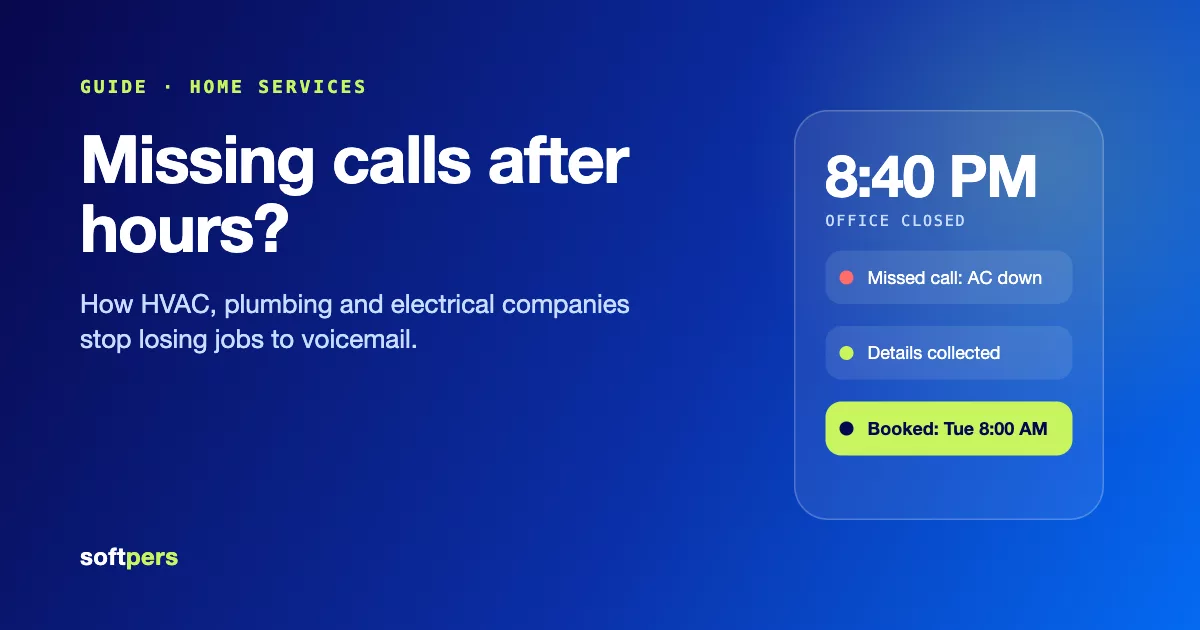
The same approach works for after-hours calls in home services: answer quickly, record the details and book a person.
Document collection: stop chasing borrowers
Much of a processor's time goes into requesting, checking and re-requesting documents. An agent can:
- Build the list from the loan program and income type, so a self-employed borrower is asked for tax returns and a salaried one for pay stubs.
- Check each upload: the right borrower, every page, the right period. Fannie Mae requires most credit documents to be no more than four months old on the note date.
- Follow up on a schedule by text or email, and tell the processor when a borrower stops responding.
- Mark what has arrived in your loan origination system, so nobody keeps a separate spreadsheet.
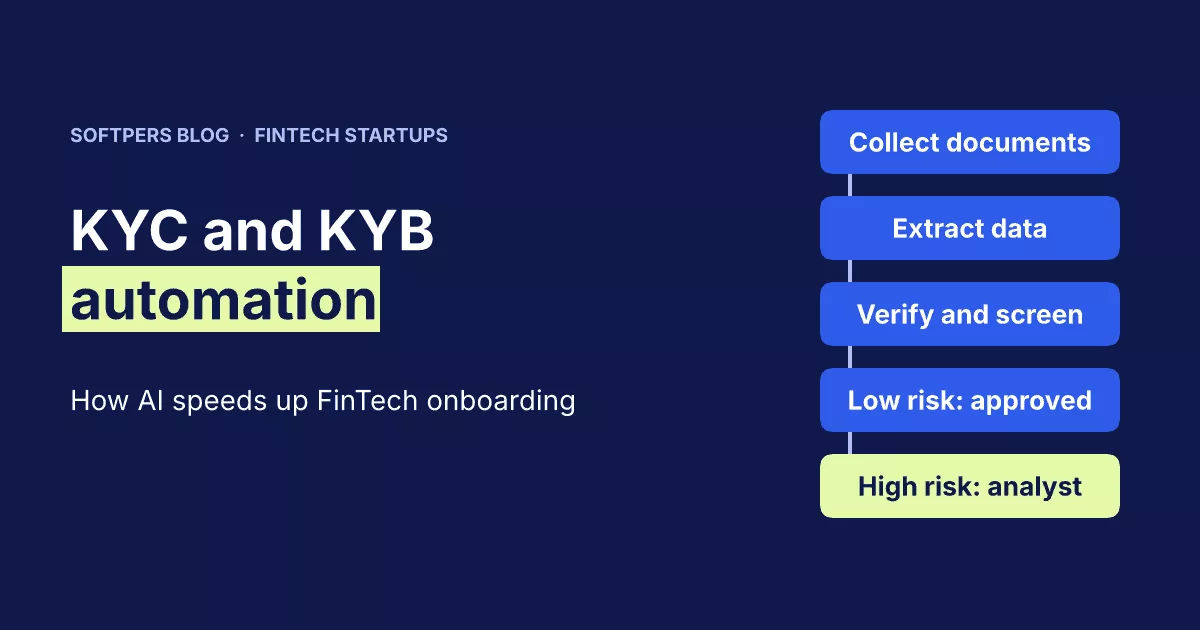
Timing matters. TRID does not allow a broker to require documents that verify the application, such as bank statements, before the Loan Estimate is provided; the official commentary uses a mortgage broker as its example. The agent can ask for information before then, but should start requiring documents only after the Loan Estimate is out. The same pattern of collecting and checking documents underpins KYB onboarding for FinTechs.
Borrower document checklist
The exact list depends on the program and the lender's overlays. A typical file needs the following.
| Area | Documents |
|---|---|
| Identity | ☐ Government-issued photo ID ☐ Signed borrower authorization and disclosures |
| Salaried income | ☐ Recent pay stubs with year-to-date earnings ☐ W-2s for the past two years |
| Self-employed income | ☐ Personal and business tax returns ☐ Year-to-date profit and loss statement ☐ Business bank statements (bank-statement programs) |
| Assets | ☐ Bank and investment statements, every page ☐ Explanation and source of large deposits ☐ Gift letter and donor statement, if any |
| Property | ☐ Signed purchase contract ☐ Homeowners insurance quote ☐ Current mortgage statement and leases (refinance or investment property) |
| Other | ☐ Divorce decree or child support order, if relevant ☐ Letters of explanation the underwriter requests |
Scenario prep: help loan officers price faster
Scenario work is slow because the details arrive in pieces: a text from the borrower, an email from the agent, a credit report. An agent can gather them into one summary with the loan amount, loan-to-value, occupancy, income type and stated credit, and note the programs worth pricing: conventional, FHA, VA, or a non-QM option such as a bank-statement or DSCR loan.
The loan officer then runs the scenario in the pricing engine or the lenders' portals. After that, AI can draft a side-by-side comparison of rate, points, payment and cash to close from the loan officer's results. The loan officer checks it, decides what to present and sends it.
Integration: connect the tools you already use
Most brokers run a loan origination system (LOS) such as Arive, LendingPad or Encompass, a CRM, a pricing engine and lender portals. Ask any vendor, or your own developer, to show the agent working with your systems:
- LOS: create the loan, update the borrower's details and mark conditions and documents received.
- CRM: log every message and move the lead through your pipeline stages.
- Calendar: book the loan officer call without back-and-forth.
- Documents: save uploads to the loan file, named the way your processors expect.
Where a system has no API, the agent can prepare the update for a person to approve and paste in. That still saves the reading and checking.
Where AI should stay out
Under the SAFE Act and Regulation Z, a loan originator is someone who takes an application or offers or negotiates loan terms, and must be licensed or registered through NMLS. Clerical and support work is excluded, which in the official commentary includes responding to inquiries with general information and assembling application packages. Design the agent to stay on that side of the line: it collects, checks and schedules, and a licensed loan officer offers the terms.
Other rules apply as well:
- TCPA: AI-generated voice calls count as artificial voice calls and need the borrower's prior consent (FCC 24-17, 2024). Since April 2025, a borrower can withdraw consent by any reasonable means, and the request must be honored within 10 business days.
- FTC Safeguards Rule: mortgage brokers must keep a written information security program. Since May 2024, they must also notify the FTC within 30 days of discovering that unencrypted information about 500 or more consumers was taken. Send borrowers a link to a secure upload, and keep Social Security numbers and bank statements out of text and WhatsApp threads.
- Disclosure: the agent should say it is an automated assistant and offer a loan officer at any point.
What AI costs a mortgage broker
| Option | Typical cost | What it covers |
|---|---|---|
| LOS with built-in portal and pricing | About $50 to $100 per loan officer a month, depending on plan and billing | Loan file, borrower portal and pricing in one system |
| Custom-built agent | From $3,000 to build, plus usage | Intake, document checks and follow-up, connected to your LOS and CRM |
| Text messaging usage | About $0.012 to $0.013 per text, including carrier fees | Reminders and replies sent by the agent |
The LOS range comes from Arive's published originator seats: $49.99 to $99.99 a month billed yearly, or $59.99 to $99.99 billed monthly. The text price is Twilio's US rate plus carrier fees. A portal collects documents but generally does not read them; that checking is what an agent adds.
For context on margins, independent mortgage banks spent $10,936 to originate each loan in the second quarter of 2026 and made $973 in pre-tax profit (Mortgage Bankers Association). Those are lender figures, but brokers face the same pressure. A simple test: compare the monthly cost with your compensation on one closed loan. If one extra closing a month covers it, it pays.
Buy or build
| Buy a ready-made tool | Build your own agent | |
|---|---|---|
| Examples | The borrower portal inside your LOS, or a standalone point-of-sale portal | An agent built around your intake script, LOS and CRM |
| Cost | About $50 to $100 per loan officer a month, depending on plan and billing | From $3,000 to build, plus usage |
| Time to start | Days | Most custom agents go live in 4 to 8 weeks |
| What it does | Collects uploads and sends reminders | Also checks each document, answers questions and updates your systems |
| Borrower data | Held by the vendor, under its terms | In your own accounts, with AI providers you approve |
Whichever route you choose, ask:
- Is borrower data kept or used to train AI, and does the setup fit your written information security program?
- Will the vendor sign a contract to safeguard borrower data? The FTC Safeguards Rule requires you to choose capable service providers, bind them to safeguards by contract and review them periodically.
- Does it write into your LOS and CRM, or only send notifications?
- How does it hand a borrower to a licensed loan officer, and is every message logged?
- Can you start on a monthly contract?
How Softpers builds a custom agent
Softpers builds AI agents around the way your brokerage already works. For a mortgage broker, that usually starts with document collection and extends to intake and status updates:
- Intake: the agent answers inquiries at any hour, records the scenario and books the loan officer call.
- Documents: it sends each borrower a tailored list, checks every upload and chases what is missing until the file is complete.
- Your systems: loans, documents and messages are written straight into your LOS and CRM, so nobody re-keys them.
- Loan officers in control: the agent never quotes rates or terms, every action is logged, and approval rules decide what it may send on its own.
AI agent projects start from $3,000. Each begins with a free 30-minute discovery call and a fixed-price pilot of 1 to 2 weeks, so you see a working first version on your own files before committing to the full build. The build takes 2 to 6 weeks with weekly demos, launch takes about a week, and a 30-day warranty follows; most agents go live in 4 to 8 weeks. Borrower data stays in your own accounts, the AI models are never trained on it, and the code, prompts and documentation are yours.
How to start
- Measure the chaseFor a month, count how many files wait on borrower documents and for how many days.
- Write down your listsAgree on the document list for each program and income type your loan officers write.
- Set the hand-off rulesDecide what the agent may say, when it hands off and who answers rate questions.
- Start with documentsPilot document collection on new files, then add intake and status updates.
Is an AI agent a fit for your brokerage? 30 seconds
FAQs
Can AI quote mortgage rates to borrowers?
It should not. Under the SAFE Act and Regulation Z, offering or negotiating loan terms is loan originator work that requires an NMLS license or registration. The agent can collect the scenario and prepare a summary, and a licensed loan officer prices it and presents the options.
Can AI collect bank statements and pay stubs before the Loan Estimate?
It can ask for information, but under TRID a broker may not require documents that verify the application, such as bank statements, before the Loan Estimate is provided. Set the agent to start requiring documents once the Loan Estimate has gone out.
Is it safe to collect borrower documents by text or WhatsApp?
Use text and WhatsApp for reminders, and send borrowers a link to a secure upload portal for the documents themselves. Mortgage brokers are covered by the FTC Safeguards Rule, which requires a written information security program and FTC notification within 30 days of a breach affecting 500 or more consumers.
Will AI work with my LOS and CRM?
A custom agent can read from and write to systems that offer an API, such as many loan origination systems and CRMs. Where there is no API, it can prepare the update for a person to approve. Ask any vendor to show it working with your own systems before you sign.
How much does AI cost for a mortgage broker?
LOS seats with a built-in borrower portal cost roughly $50 to $100 per loan officer a month, depending on plan and whether you pay yearly or monthly. A custom agent built by Softpers starts from $3,000, plus usage such as AI and text messaging, which runs about $0.012 to $0.013 per text including carrier fees.
- AD Mortgage broker survey finds rising AI use and training gaps (HousingWire, May 2026)
- ICE Mortgage Monitor, May 2026 (MBA NewsLink, 2026)
- IMB mortgage profits, Q2 2026 (HousingWire, on Mortgage Bankers Association data, August 2026)
- 12 CFR 1026.2(a)(3): Definition of application (Consumer Financial Protection Bureau)
- 12 CFR 1026.19(e): Loan Estimate timing and verification of information (Consumer Financial Protection Bureau)
- Official interpretation of 12 CFR 1026.36: Loan originator (Consumer Financial Protection Bureau)
- 12 CFR 1002.4: Discouragement of applicants (Regulation B) (Consumer Financial Protection Bureau)
- Declaratory Ruling on AI-generated voices under the TCPA, FCC 24-17 (Federal Communications Commission, 2024)
- FCC sets effective date for TCPA consent revocation rules (Kelley Drye, 2025)
- FTC amends Safeguards Rule to require non-banking financial institutions to report data security breaches (Federal Trade Commission, 2023)
- 16 CFR 314.4: Elements of the Safeguards Rule information security program (Legal Information Institute, Cornell Law School)
- B1-1-03: Allowable age of credit documents (Fannie Mae Selling Guide)
- Arive pricing (Arive, 2026)
- SMS pricing for the United States (Twilio, 2026)